

Backflow prevention
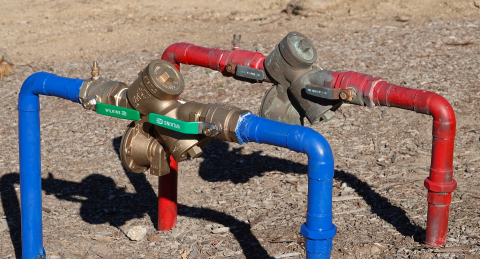
Backflow is when there is an unplanned reversal in the direction of water flow in a pipe, and that flow then enters the public water network. There is potential for any property to contaminate the water supply by backflow.
Could this be happening at your place?
Backflow can occur in two ways:
- Back siphonage
- Back pressure
Back siphonage is when water or another fluid is sucked back into the water supply when there is a drop in pressure in the water mains. The most common cause of back siphonage at a home is the garden hose. When it is left running underwater in a bucket or a swimming pool, it can take the water back into the water main.
Back pressure might happen when a fluid is pumped directly into the water main by a pressurised system. This could be when a there is a cross-connection between a home owner's private garden irrigation system and the public water supply via the house pipes.
How to prevent backflow from happening
Devices can be installed to stop the flow of water back into the water supply. It is the property owner's responsibility to pay for this backflow protection. The type of backflow prevention device that needs to be used is based on the level of risk to the water supply from the property.
For homeowners, Ashburton District Council provides low level protection at the water connection to the public water supply. This does not protect water from hazards that can occur within the home.
For some homes, such as where there is a swimming or spa pool, this may not be enough protection and another device may be needed.
For further advice on what type of backflow device you will need, please contact your plumber or Council on (03) 307 7700.
High risk backflow requirements
The national Water Services Authority Taumata Arowai sets backflow prevention rules requiring Council to assess the risk of backflow in their supply networks and ensure appropriate backflow prevention devices are installed.
You can read Council’s Backflow Prevention Policy here.
The installation must comply with AS/NZS 2845.1 and clause G12 of the NZ Building Code and be installed to the manufacturer’s instructions.
Preferred Valve Selection (AS/NZS 2845.1 Compliant):
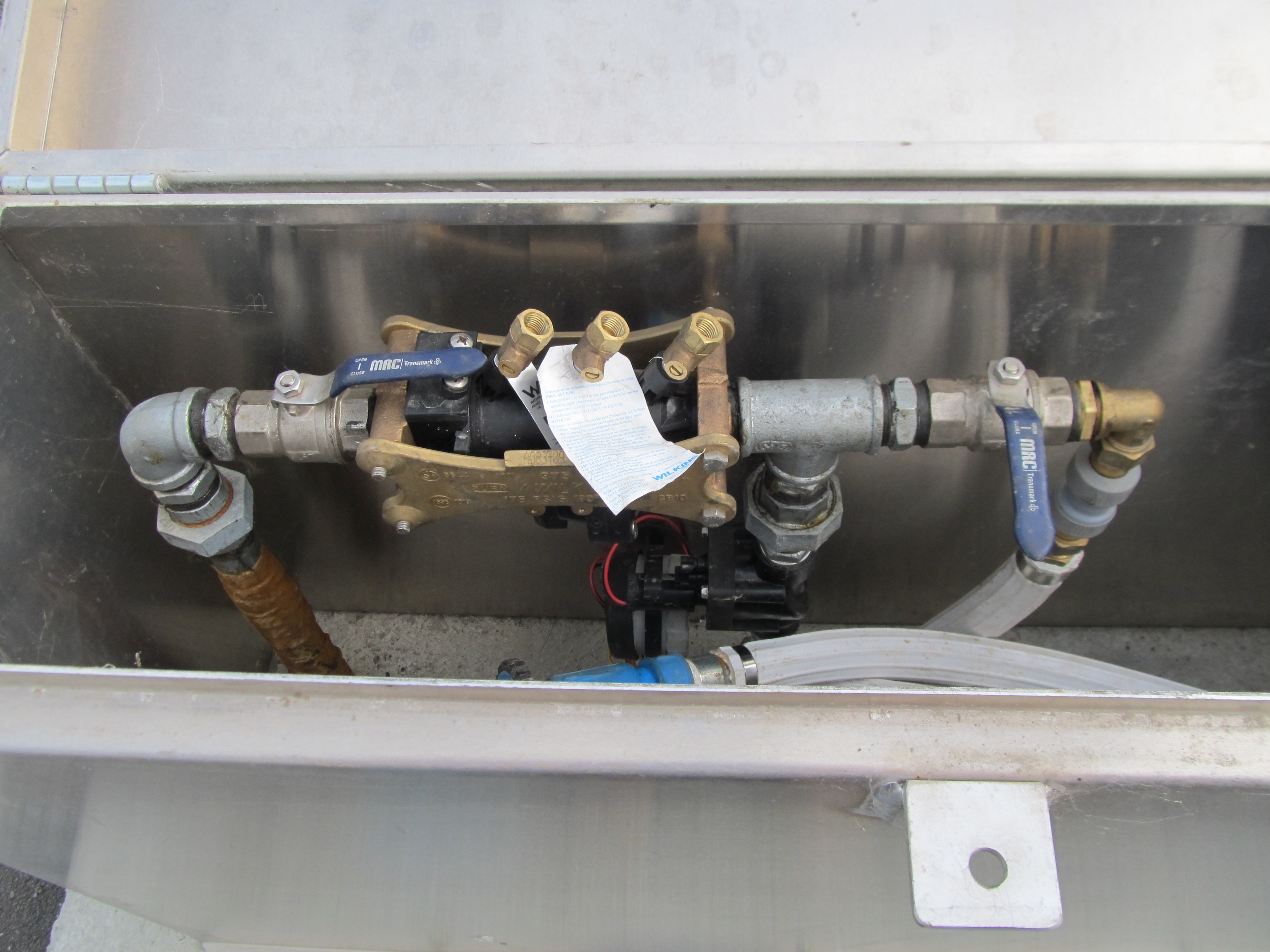
Watts: Series 009 RPZ / Zurn Wilkins: 375 series RPZ. Certified as Lead Free.
One (1) individual Reduced Pressure Zone (RPZ) device/s must be installed.
Device/s must be installed on the outlet side of each water meter at the property boundary.
Each device must be installed at a minimum height of 300 mm above ground level.
Installation within the road reserve must be completed by the Council’s Approved contractor, Ashburton Contracting Limited, ACL. Devices situated within the property boundary may be installed by any licensed plumber.
Isolation valves must be installed on both sides of the device to allow for testing.
A line strainer must be installed upstream of the device to prevent damage from debris.
The installation must be carried out by a licensed plumber.
Plumber to confirm nominal pipe size prior to installation.
There shall be no unprotected bypass installed around the device.
The device should be protected from physical damage and freezing and be secured from vandalism.
Upon installation, devices must be commissioned and tested by an Independently Qualified Person (IQP).
The property owner is responsible for having these devices tested annually and submitting the test reports to the Council via: certificates.backflow@adc.govt.nz
Resources & Documentation
Please access the links below to download the required documentation for completion and submission.
Backflow Prevention Policy
Documents to be returned:
Following installation, please email the following documents to certificates.backflow@adc.govt.nz once completed.
IQP Test Certificate (RPZD) - Backflow Prevention Device Test-RPZD
The installation must comply with AS/NZS 2845.1 and clause G12 of the NZ Building Code and be installed to the manufacturer’s instructions.
Preferred Valve Selection (AS/NZS 2845.1 Compliant):
Watts: Series 007 DCVA / Zurn Wilkins: 350 series DCVA. Certified as Lead Free.
One (1) individual Double Check Valve (DCV) device/s must be installed.
Device/s must be installed on the outlet side of each water meter at the property boundary.
Installation within the road reserve must be completed by the Council’s Approved contractor, Ashburton Contracting Limited, ACL. Devices situated within the property boundary may be installed by any licenced plumber.
Each device should be installed in an in-ground box with sufficient clearance from the box walls to be accessible for testing. Any device located within a trafficable area must be installed using the Acuflo AMB Trafficable box range.
Isolation valves must be installed on both sides of each device to allow for testing.
A line strainer must be installed upstream of each device to prevent damage from debris.
The installation must be carried out by a qualified plumber.
Plumber to confirm nominal pipe size prior to installation.
There shall be no unprotected bypass installed around the device.
The device should be protected from physical damage and freezing and be secured from vandalism.
Upon installation, the devices must be commissioned and tested by an Independently Qualified Person (IQP).
The property owner is responsible for having these devices tested annually and submitting the test reports to the Council electronically via: certificates.backflow@adc.govt.nz.
Resources & Documentation
Please access the links below to download the required documentation.
Policy Reference:
Documents to be Returned:
Following installation, please email the following documents to certificates.backflow@adc.govt.nz once completed.
IQP Test Certificate (DCV) - Backflow Prevention Device Test-DCV