Cr Phill Everest: Challenges of a changing Local Government landscape

Cr Phill Everest represents the Eastern Ward.
Well, I’m just over two months into my role as your Councillor for the Eastern ward, a position I took on to give something back to our great community.
The job has grown significantly since our election, with changes and proposed changes to local and regional government.
Early this year Council will be working on the 2026/27 budget. The Government has asked Councils to keep to our core business, and from 2029 is considering legislating a maximum rate increase of 2-4%, for specific council expenditure items.
A quick look on Dr Google and I note that our long-term inflation rate averages 5.4% - a high in recent years of 18.9% in 1987 and low of 0.29% in 2015.
This target by the Government will look to place some significant challenges on Council. The easy solution is to stop inflation of all costs, but we don’t control that.
Option two is to reduce the level of service provided by Council, which many would be unhappy with.
On a more positive note, the proposed Regional Government (Ecan) reforms and a review of the Resource Management Act could provide an enabling and sustainable future for our community. The execution of existing policies by Ecan seems to restrict innovation and may frequently impede positive initiatives from being undertaken.
A local Valetta farmer has told me there is a lack of understanding by Ecan about compliance of land use consent, but surely if an A audit on a land use consent doesn’t indicate compliance to a farm environment plan, then what does?
For two years, the Ashburton Lakes Catchment Group has been wanting to develop a small, constructed wetland (less than 2300 m2 – about the size of three sections in town) to see how much they can improve water quality in the catchment.
Ecan want five or six consents to allow the wetland construction, with an estimated cost of $50,000-$80,000. The total construction, planting and monitoring cost has been budgeted at $25,000-$30,000 (depending on consenting requirements).
Where is the sense in requiring expensive consents for an activity that will enhance environmental and biodiversity outcomes?
Share this article
Latest News
Safe passage for Hampstead students
Winners announced for Zonta Ashburton Art Awards
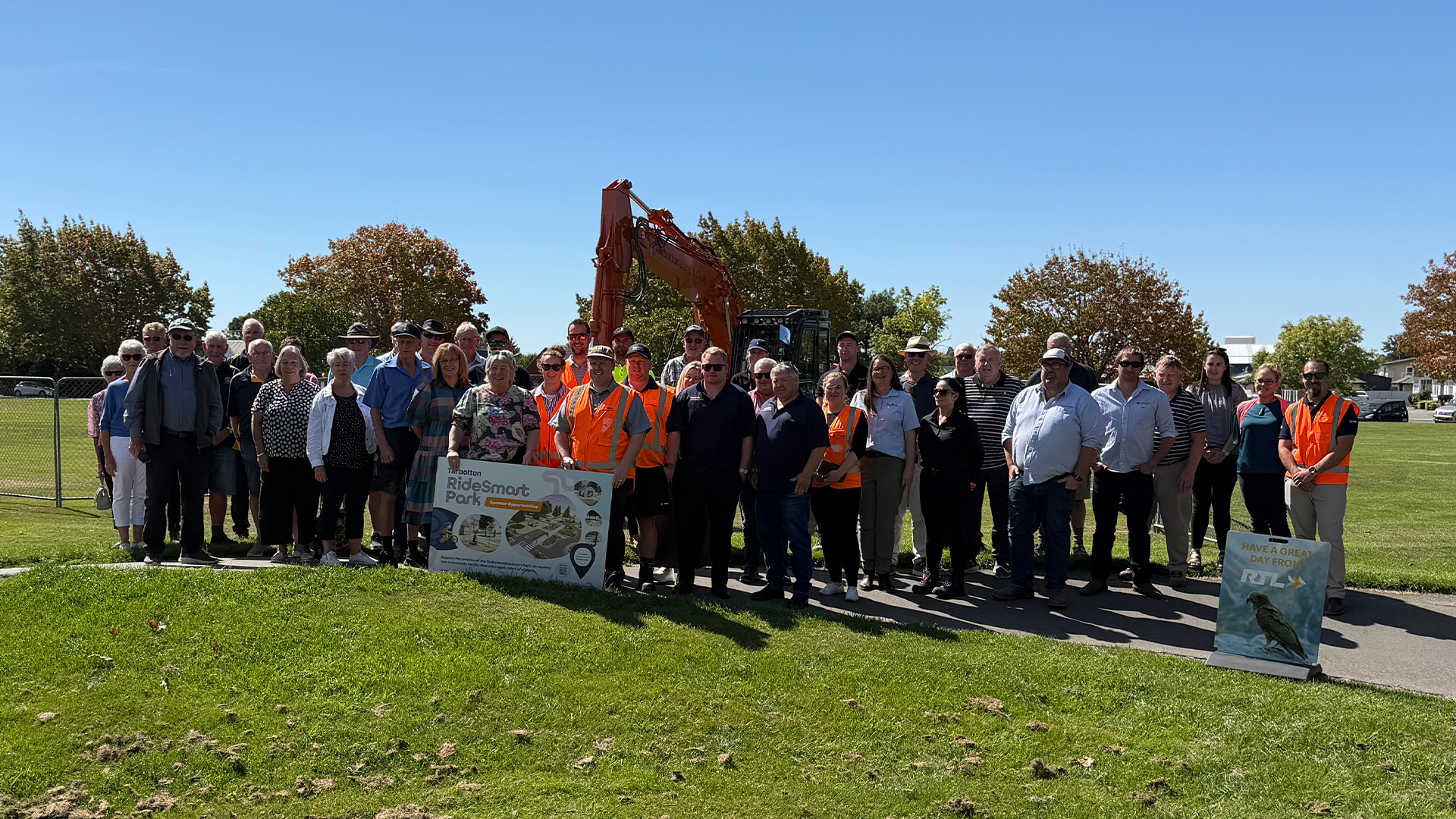
Diggers primed for bike skills park project
Mayor Liz McMillan: Here's how the Annual Plan 2026-27 is tracking
Apply for our grants, urges Methven Community Board
Road Closures
SEAFIELD ROAD
from 2 Mar 7:00 to 10 May 19:00
FAIRFIELD ROAD
from 26 Jan 7:00 to 19 Apr 18:00
CATHERINE STREET
from 18 Mar 8:00 to 24 Apr 18:00
TANCRED STREET
from 23 Mar 7:00 to 27 Mar 18:00
JOHNSTONE STREET
from 16 Mar 8:00 to 17 Mar 16:00
View all Road Closures | Live map