Lake Hood Algal control study kicks off
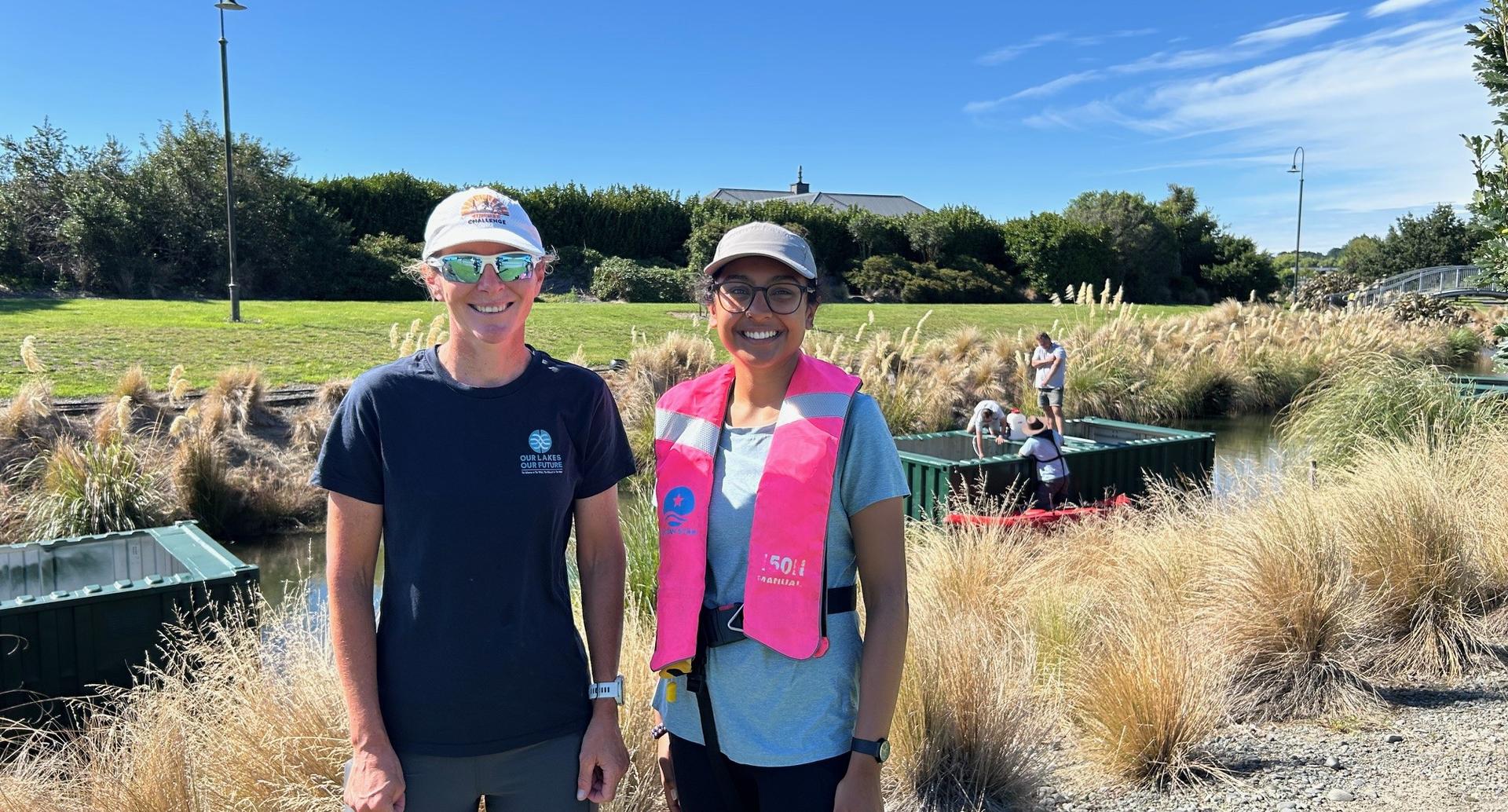
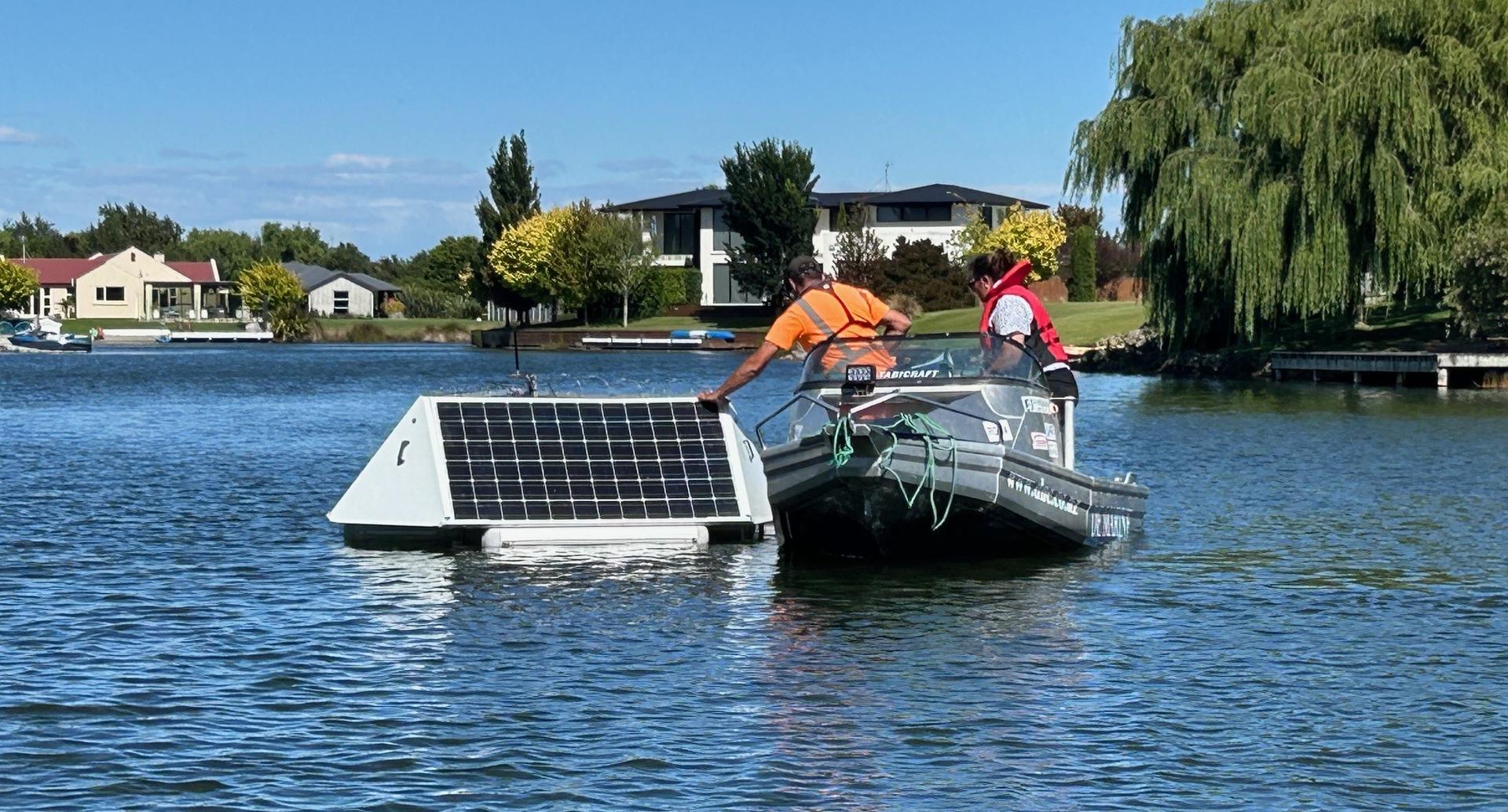
Pictured: Lincoln University Professor Susie Wood and student Sadhvi Patel
A scientific study into algal control products at Lake Hood began this week, with several distributors of the products on site to help the project kick off.
Professor Susie Wood from Lincoln University, who is leading the study, said that the work was important for Lake Hood and lakes across New Zealand.
“A scientific approach is not just important for Lake Hood, but any lake, because every lake is different and the causes are different in each system.
“Resources are limited, so we want to ensure any money is spent effectively and that we get a long-term solution that’s tailor made for this lake.
“There’s lots of potential solutions, so we want to have robust data to help the Council make the right decision for this lake.
She said the sealed shipping containers being used in the lake’s canal are like “mini lakes”, and they’re open to the sediment at the bottom of the lake, where algal biomass can lie dormant.
“Some products are chemical based and some are biological. Essentially, the products either kill the cyanobacteria or enhance other things to outcompete them.”
She said these products could be part of the solution for Lake Hood but not the whole solution, and they might be applied to specific locations, like the water ski area for example.
The project team also have installed ultrasound devices around the lake, to test their effectiveness against cyanobacteria blooms.
Professor Wood said that ultrasonics machines emit high-frequency sound waves that burst the cyanobacteria cells.
Council asks that people on the water steer clear any trial equipment while the full scientific study is under way.
The study is part of a national collaboration by many research organisations to improve the health of New Zealand lakes, and is part of the Our Lakes, Our Future project.
Various measures will be monitored until the end of April.
Health Warning
Health New Zealand issued a health warning for the lake on 14 January, after sampling showed elevated levels of potentially toxic planktonic cyanobacteria in a sample from the water ski area.
Water testing has been conducted weekly by Environment Canterbury. The latest result, from a sample taken in the water ski lane on the 29 January, was a cyanobacteria biovolume of 0.01mm3/L.
Although the Jumping Platform is physically separated from the main body of the lake and is spring-fed, Council advises that users of the Jumping Platform should exercise caution due to the proximity of the two water bodies.
While the lake and Jumping Platform are not closed, Council continues to ask people to follow the advice of the health warning.
Council also supports Environment Canterbury’s campaign to keep dogs safe around cyanobacteria, “if in doubt, keep them out”, as exposure to the toxic algae can be fatal for dogs.
Council has a dedicated Lake Hood page on its website, ashburtondc.govt.nz and those interested in the water quality project can sign up for regular updates.
Share this article
Latest News
Short water shutdown for parts of Rakaia east
Photo competition highlights our heritage hotspots
Changes for swim squad confirmed
Autumn What's On Guide, out now
Safe passage for Hampstead students
Road Closures
DAVID STREET
from 23 Mar 7:00 to 10 Apr 18:00
SEAFIELD ROAD
from 2 Mar 7:00 to 10 May 19:00
FAIRFIELD ROAD
from 26 Jan 7:00 to 19 Apr 18:00
CATHERINE STREET
from 18 Mar 8:00 to 24 Apr 18:00
TANCRED STREET
from 23 Mar 7:00 to 27 Mar 18:00
View all Road Closures | Live map