
New aerators keep wastewater ponds in good health
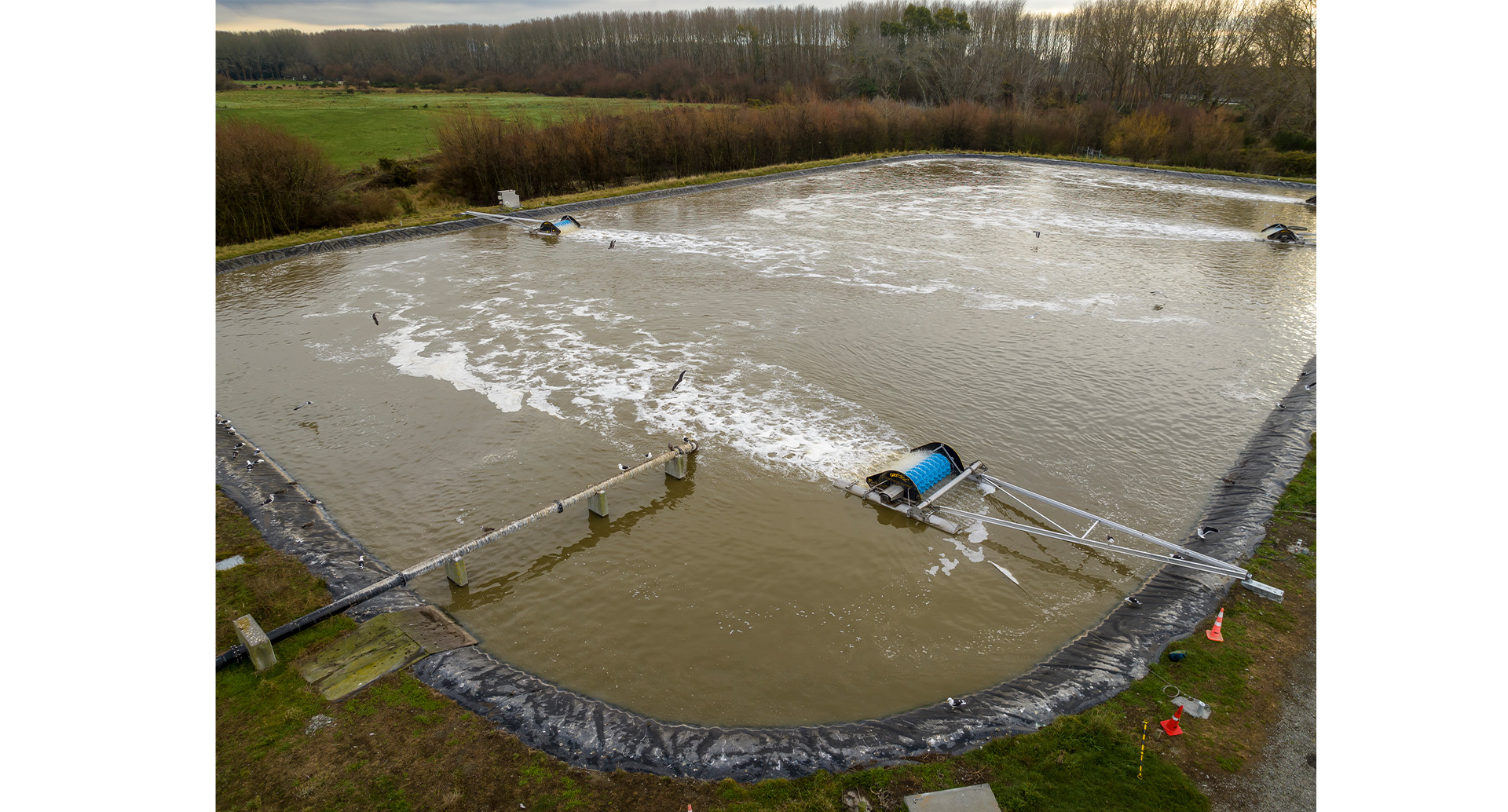
Seven new aerators at the Wilkins Road wastewater treatment plant are deliberately causing quite a stir.
The aerators, four in the first settling pond and three in the second oxidation pond, churn up the water and move it around, ensuring there is enough oxygen evenly distributed for bacteria to break down the effluent.
Without aeration, bacteria would struggle to multiply and die before completing their part in the wastewater treatment process.
Group Manager Infrastructure and Open Spaces Neil McCann said the aerators were currently running 24 hours a day, but oxygen levels would eventually be monitored and the aerators only be activated when a trigger level was reached.
“The first aeration pond, built in 2008, had 10 aerators but now we only need four, thanks to technological advancements. This means wastewater is better treated when it moves to the second pond, where oxidation occurs, and where we have three aerators currently operating.
“Since the new aerators were installed earlier this year, there’s been a significant improvement in water quality in both ponds, visually and in the measurement of dissolved oxygen in the water.”
The total cost of the aerators was just over $1 million.
Mr McCann said it was important for the wastewater to be treated properly and efficiently to minimise the amount of sludge that accumulates in the ponds.
“Sludge build-up can cause odour issues as well as creating the need to desludge the ponds sooner than necessary, which is very expensive operation. The ponds at Wilkins Road have not required desludging since they opened, because we’ve kept the oxidation process going efficiently, but climate change may create challenges in the future.
“Ponds are extremely forgiving, but they rely on bacteria to do all the heavy lifting. If temperatures are too warm, the chemistry of the water can change without enough oxygen and the bacteria die and turn into sludge.
“That creates a blanket on the pond that stops the treatment process, so it’s critical for water to be moving and to have oxygen introduced to keep the bacteria alive.”
The ponds at Wilkins Road treatment plant receive Ashburton’s residential and commercial wastewater from the reticulated network and supply pipeline, or delivered in tankers by contractors who empty septic tanks.
Mr McCann said one of the biggest bugbears for the wastewater treatment system is flushable wet wipes.
“Unfortunately, these don’t break down like some manufacturers claim and they have to be mechanically removed via a screen at the plant and then taken to landfill. They wrap around our pumps and can cause overflows of wastewater from our system.”
Share this article
Latest News
Safe passage for Hampstead students
Winners announced for Zonta Ashburton Art Awards
Diggers primed for bike skills park project
Mayor Liz McMillan: Here's how the Annual Plan 2026-27 is tracking
Apply for our grants, urges Methven Community Board
Road Closures
SEAFIELD ROAD
from 2 Mar 7:00 to 10 May 19:00
FAIRFIELD ROAD
from 26 Jan 7:00 to 19 Apr 18:00
CATHERINE STREET
from 18 Mar 8:00 to 24 Apr 18:00
TANCRED STREET
from 23 Mar 7:00 to 27 Mar 18:00
JOHNSTONE STREET
from 16 Mar 8:00 to 17 Mar 16:00
View all Road Closures | Live map